Changelog

Follow new updates and improvements to LearnCard.

June 12th, 2026

Welcome back to another LearnCard ChangeBlog!

This release expands the types of credentials LearnCard can exchange, improves how learner records are displayed, and gives credential issuers more control over the credentials they manage. Let’s dig in!

LC-1868 / LC-1869: A New Comprehensive Learner Record Experience

Comprehensive Learner Record credentials now open in a clearer, transcript-style display.

Instead of presenting a dense collection of credential data, LearnCard organizes the record into a readable hierarchy containing the learner, issuing institution, programs, courses, scores, and results. CLR credentials also receive distinct card and badge treatments so learners can recognize them in their Passport.

Additional fixes improve CLR previews on mobile devices, including safer spacing and better handling of linked files. View a demo version of this new CLR transcript here.

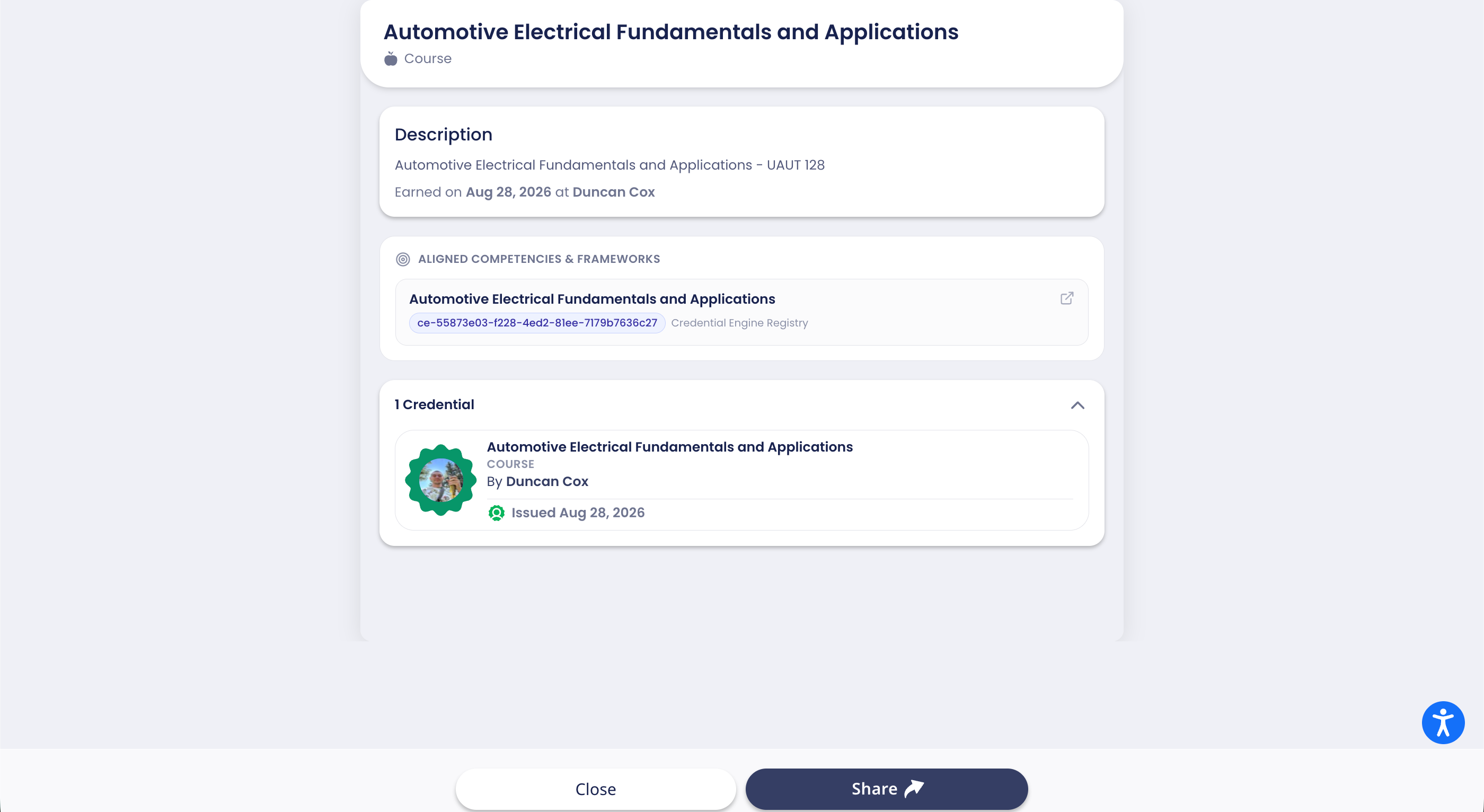
A fully populated CLR transcript, straight into your wallet!

Support for Selectively Disclosable SD-JWT Credentials

LearnCard can now receive, store, and present SD-JWT Verifiable Credentials.

This credential format allows learners to choose which individual claims they disclose when presenting a credential. Required information remains visible, while optional fields can be shared selectively through the consent screen.

Follow-up interoperability work also adds support for the EUDI reference issuer and presents disclosed claims with clearer labels inside LearnCard.

LC-1621: Age and Country Checks Now Happen First

New users are now asked for their age and country before completing the rest of their profile.

Previously, someone could enter their role, name, profile picture, and user ID before learning that additional age-related consent was required. The updated flow applies the correct privacy and guardian rules at the beginning, creating a clearer onboarding experience for learners and families.

LC-1862: Credential Revocation and Suspension Controls

Issuers can now revoke, suspend, and unsuspend individual credentials from the Issue Credentials dashboard and Managed credential views.

Each issuance displays its own status and actions, allowing issuers to manage multiple credentials sent to the same recipient without accidentally changing the wrong one.

This is the first portion of the credential-status experience. Additional holder-facing status displays and notifications arrive in a later release.

Also in this release

You can view all the latest changes and bug fixes here.

June 5th, 2026

Welcome back to another LearnCard ChangeBlog!

This release strengthens credential portability and interoperability across the LearnCard ecosystem. It introduces encrypted wallet continuity tools, updates newly issued credentials for Open Badges 3.0 compliance, and improves support for OpenID credential experiences on mobile devices. Let’s dig in!

LC-1798: Holder Continuity

LearnCard now includes a new set of holder continuity tools for securely exporting, restoring, and transferring wallet data.

Users and administrators can create encrypted wallet backup bundles containing credentials and important wallet records. These bundles can be used either to restore the original wallet identity or to import credentials into another wallet.

This work also introduces safeguards around bundle size, credential verification, private data, and status-list retrieval. It is an important foundation for long-term learner ownership and credential portability.

LC-1872: Open Badges 3.0-Compliant Credential Proofs

Credentials issued through LearnCard now use an Open Badges 3.0-compatible Data Integrity proof by default.

This improves interoperability with other standards-compliant credential platforms while preserving support for previously issued credentials. Developers can still explicitly select other supported proof formats when required.

OpenID Deep Links on iOS and Android

The LearnCard mobile app can now open OpenID credential offers and presentation requests directly from supported links.

This lays the groundwork for smoother cross-application credential experiences. Learners can move from an issuing or verification experience into LearnCard without manually copying request information, while new LearnCard-powered mobile applications inherit the same behavior through their tenant configuration.

You can view all the latest changes and bug fixes here.

May 29th, 2026

Welcome back to another LearnCard ChangeBlog! As many of our partners end the school year, we begin another season of preparation and ideation. Numerous grants across the learning & employment ecosystem send strong signals supporting learner-controlled, interoperable proof of learning, and real, tangible job resources with clear pathways for advancement. We’re continuing to enhance LearnCard to keep up with these changes - if there’s anything you’d like to see our stack offer, shoot me a message at duncan@learningeconomy.io, or add it directly to our roadmap!

This release brings new profile-building analytics, expanded skills framework support, an App Store refresh, and a polished role scroller. Let's dig in!

LC-1853 - Profile-Building Analytics

This PR adds PostHog event instrumentation for the profile-building flow, answering key PM questions around time-to-build, method attribution, per-method duration, AI activation threshold, and Skills Profile funnel timing.

We use this anonymized data to better understand how people are using LearnCard, where they’re getting stuck and confused, and which features are bringing the most value. 

Support for Multiple Global Skills Frameworks (including Pathsmith Durable Skills Start Framework)

This PR adds support for multiple global skills frameworks, with Pathsmith Durable Skills Starter as the latest integration. Now, users across LearnCard can leverage these frameworks when creating credentials, self-attesting skills, and exploring their own skills. The network brain service and LearnCard app now recognize and handle framework-specific data alongside the existing default framework -  it’s easier than ever to add new ones! 

LC-1802 - App Store Tabs

This PR introduces enhanced App Store tabs and filter behavior. This improvement makes My Apps the default tab, and streamlines the behavior for suggested apps and app filter categories. 

LC-1843 - Replace Horizontal Role Scroller

This PR replaces the horizontal role scroller with an updated component across the LearnCard app. We missed the mark on our previous iteration - we’re reverted back to a simpler drop-down menu for role-switching in the native app. 

Also in this release

  • LC-1844 - Central Logging System (#1261) — Adds a centralized logging system shared across the LearnCard app and ScoutPass.

You can view all the latest changes and bug fixes here

May 12th, 2026

Welcome back to another LearnCard ChangeBlog!

This week's release is a polish-and-fix pass: a much snappier Build My LearnCard flow, a critical fix for resume publishing, more flexibility for credential status on the developer side, and another round of Bug Fest cleanup. Let's dig in!

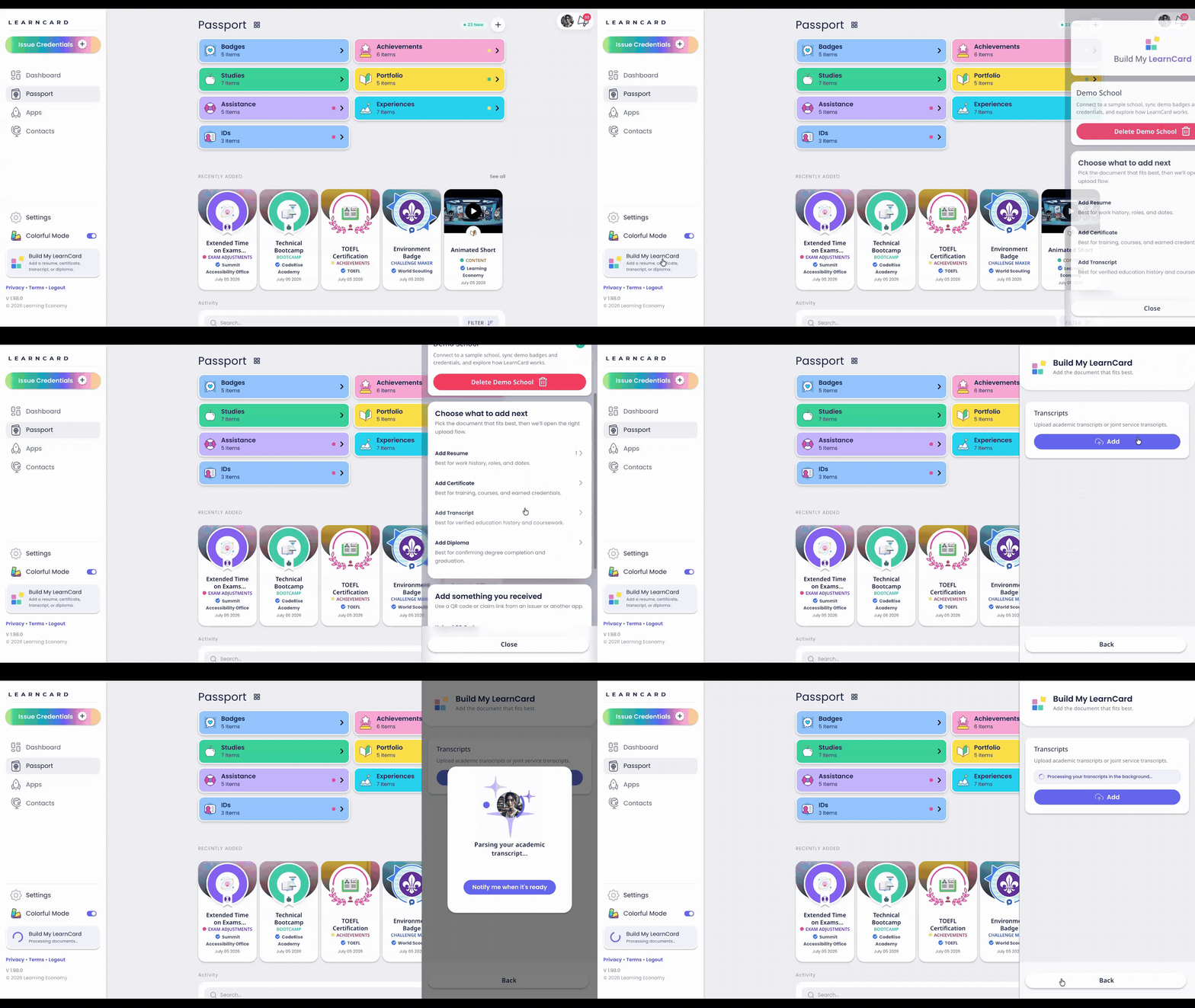
Build My LearnCard: Faster, Snappier Uploads & Deletes

We made the Build My LearnCard flow noticeably more responsive in two places this release.

LC-1792 - Persistent Upload-Success Toast

The upload-success toast is now persistent, includes the filename and the target wallet categories, and appears the moment parsing finishes - no more 5–6 second lag. As a small bonus, empty-extraction uploads no longer falsely claim to have been "Successfully Parsed."

LC-1793 - Instant Artifact Deletes

Deleting an artifact now removes it from the UI instantly. The wallet removal and checklist refetch run in the background, with automatic rollback if anything fails. The whole flow feels dramatically snappier when you're cleaning up artifacts in your LearnCard.

LC-1813 - Fix: Publishing Resumes Failing with "Protected Term Redefinition"

This PR fixes a bug where publishing a resume would fail with a "Protected term redefinition" error. Resume publishing should now work cleanly again across supported credential shapes.

Array-Form credentialStatus Support

For our developers: the @learncard/didkit-plugin now supports the Array form of credentialStatus, bringing it closer to the latest VC Data Model and giving issuers more flexibility when describing credential revocation, suspension, and status lists.

Bug Fest, Continued

Our developers shipped another round of fixes and polishes under the LC-1788 Bug Fest banner (PR #1207, PR #1215). After the success of the first Bug Fest in March, we've folded it into our regular cadence - expect smaller, recurring fix passes alongside the feature work.

You can view all the latest changes and bug fixes here

May 5th, 2026

Welcome back to another LearnCard ChangeBlog!

This week's release brings important hardening to the Partner Connect SDK, W3C Bitstring Status List support for credential verification, native iOS 26 support, and a couple of nice quality-of-life UI improvements. Let's dig in!

LC-1827 - Multi-Origin Partner Connect with Default Tenants

This PR adds multi-origin support to Partner Connect with default tenant handling. Partner apps now work on any LearnCard-managed tenant out of the box, making it dramatically easier to deploy partner integrations across multiple LearnCard environments.

W3C Bitstring Status List Support in DIDKit

This PR adds W3C Bitstring Status List support to DIDKit credential verification. Credentials that use BitstringStatusListEntry can now be checked against BitstringStatusListCredential status credentials -  including both revoked and unrevoked VC 2.0 status entries. This brings our verification stack closer to the latest VC Data Model 2.0 spec.

LC-1803 - iOS 26 Native Support

This PR adds native iOS 26 support to the LearnCard mobile app, ensuring the app continues to feel at home on the newest iOS release.

LC-1790 - Eliminate First-Load Route Flash on Wallet Sub-Routes

A polish item that should land well with users: this PR eliminates the first-load route flash on wallet sub-routes. Navigation into the wallet feels noticeably smoother on initial load.

Version Modal: @capacitor/device + Device Info Rows

A small but useful improvement to the version modal - it now pulls device info from @capacitor/device and surfaces it alongside the build version, making support and bug-reporting flows easier.

You can view all the latest changes and bug fixes here

April 29th, 2026

Welcome back to another LearnCard ChangeBlog!

This release is a smaller, focused one — a refreshed AI chat experience on desktop, plus a stack of behind-the-scenes Capgo improvements and a new version modal. Let's dig in!

LC-1752 / LC-1785 — AI Topics & Sessions UI Refresh (Desktop)

This PR delivers a desktop UI refresh for AI Topics and Sessions. The chat experience is now cleaner and more spacious on larger screens, making it easier to follow longer Insight Sessions and AI-assisted flows.

Capgo Fixes + CI Check + Version Modal

A round of native-update plumbing: this PR fixes outstanding Capgo issues, adds a CI check to catch regressions, and introduces a version modal. The version modal makes it easier for users — and our support team — to see exactly which build is running when issues come up.

You can view all the latest changes and bug fixes here

April 9th, 2026

Welcome to another LearnCard Changeblog! With a number of events and live demonstrations over the past weeks, we’d feature-locked LearnCard to ensure smooth sailing. Behind the scenes, we kept on pumping out changes and improvements to LearnCard! Let’s dive in.

This release is a big one — Let's dig in!

LC-1730 / LC-1731 — Guardian-Gated Credential Issuance

This PR adds Guardian-Gated Credential Issuance — when enabled, credential issuance for minor accounts requires explicit guardian approval. This is a meaningful step for K-12 deployments and any workflow involving learners under 18.

LC-1678 — Pathways 2.0: Explore Roles

The next step in our Pathways feature set: Explore Roles. Learners can now actively explore career roles within their Pathway, getting more agency in discovering and committing to the goals that resonate with them.

LC-1742 — App-Scoped Counters + In-App Notifications

This PR introduces App-Scoped Counters and a new In-App Notifications system. Apps in the App Store can now track engagement counters scoped to their own context, and learners receive in-app notifications about activity from those apps without leaving LearnCard.

LC-1726 — First-Class CLR 2.0 in CredentialBuilder

Building on the Enhanced CLR work we shipped in late March, this PR brings full first-class CLR 2.0 support into CredentialBuilder. Issuers can now author, edit, and issue CLR 2.0 credentials directly from the CredentialBuilder UI.

Build custom CLRs, right in LearnCard!

requestLearnerContext for App Store Apps

This PR adds requestLearnerContext support across Partner Connect, the LearnCard host, and the network stack — so embedded App Store apps can request learner context for AI flows. As a bonus, requestConsent() now resolves the configured contract from the app listing's integration automatically when a contract URI isn't passed explicitly, and there's a new request-learner-context demo app to exercise the full flow.

Also in this release

A few smaller wins worth calling out:

You can view all the latest changes and bug fixes here

April 3rd, 2026

Welcome back to another LearnCard ChangeBlog! This month has some major events ahead for us, including the Transforming Global Education Summit on May 1st. Organized by the PVBLIC Foundation and co-hosted with the Governments of Antigua and Barbuda and the Kingdom of Tonga, we’ll be holding discussions about how to modernize education infrastructure for the benefit of all learners.

This week’s changelog includes some key privacy updates as well as UI refreshes. Let’s dig in!

LC-1602 - Gate-Sensitive Profile Fields

This PR strengthens user privacy by adding even more controls around sensitive profile information. We’ve refactored the profile retrieval system when interacting with users on the LearnCard Network. Instead of a one-size-fits-all approach to profile interactions, we’ve broken out different tiers of permissions and profile sharing based on context. These changes further minimize over-exposure of user data and reduce data shared between users to a minimum.

LC-1663 - Streamline Auto-Verify Email

This PR simplifies and accelerates our email verification process - if a user signs up to LearnCard via email & code, emails are automatically verified. Once verified, users can receive credentials via our Universal Inbox, which is mapped to their LearnCard’s unique ID.

LC-1637 - Connect Website Guide

This PR is for the devs - it upgrades our Connect Website guide in the Developer Tools menu to include updated instructions, improved readability, and accurate descriptions to ensure seamless, straightforward integration with the LearnCard stack.

As we continue to add new tools and guides for users to integrate with LearnCard, please let us know what kinds of guides you’d like to see! You can submit them at roadmap.learncard.com

LC-1661 - Self-Assigned Skills UI Updates

This PR improves our interface for adding and managing self-assigned skills! As part of a larger Pathways effort we’re rolling out, this new toolset empowers learners to articulate and reflect on their own skills.

The new Self-Assigned Skills interface

With semantic search and skill suggestion capabilities, this set of features aims to give more agency to learners, while still placing guardrails around the verification of skills data - any self-assigned skills come with a “Self-Assigned” icon, to allow potential employers or education institutions to better assess the nature of any incoming skills data.

You can view all updates and fixes here

March 27th, 2026

Last week, we wrapped up a long-overdue Bug Fest! Our developers spent several days focused entirely on identifying and resolving bugs and usability issues, resulting in a top-to-bottom list of minor improvements across the whole LearnCard stack!

Let’s dig in to these changes.

Bug Fest

We resolved a large number of bugs, large and small, including:

  • Improved Family account and profile handling (child name, images, and family-related fixes)

  • Smoother verification experience with auto-fill and improved code input UI

  • Fixed issues with Pathways career data formatting and video playback

  • Resolved navigation problems in App Builder and embedded Dev Tools

  • Fixed login redirect issues from App Store listings

  • Enabled users to unsubmit apps after submission

  • Improved App Builder steps (embed URL flow and icon state handling)

  • Enhanced build page usability and navigation

  • Polished AI Passport experience

  • And more!

We’re grateful to have the time and opportunity to resolve these issues - many have been lurking beneath the surface for a long while. After the success and clear improved experience as a result of Bug Fest, we’ll be adding it to our regular cadence.

LC-1674: Enhanced CLR

This PR improves how Comprehensive Learner Record (CLR) credentials are structured, processed, and displayed within LearnCard. In partnership with several statewide school system administrators, we’ve been working to ensure any types of records and data within a CLR are displayed in an accurate, useful manner. We’ve added support for things like GPAs, standardized test scores, and more, all procedurally layered in to any records contained within a CLR.

Key improvements include:

  • Standardizes CLR credential formatting to ensure consistency across issued records

  • Improves how CLR data is parsed and rendered, resulting in clearer and more accurate credential presentation

  • Strengthens validation to prevent incomplete or improperly formatted credentials from being created or shared

  • Aligns CLR handling more closely with established credential standards, improving interoperability across platforms

  • Enhances overall reliability when issuing, storing, and viewing learner records

You can view all changes and bug fixes here

March 20th, 2026

Welcome back to another set of LearnCard updates!

On the heels of our events last week, we’ve been enhancing the entire LearnCard stack - including a long overdue Bug Fest this week, where our developers are reviewing the app with a fine-toothed comb. Bug Fest wraps this Friday, so starting next week we’ll have a much improved LearnCard UX.

Let’s dig in to this week’s changes!


LC-986 - SSS Key Management & AuthCoordinator

This PR third-party key custody with a self-hosted Shamir Secret Sharing system and introduces a unified AuthCoordinator to manage authentication state across flows. Until this point, we’ve supported primarily Web3Auth - now, you can choose your auth system! This update adds full support for wallet setup, recovery, cross-device login, passkeys, and migration, shifting LearnCard toward a more self-sovereign and recoverable key management model.

LC-1645 - Resume Builder

This PR introduces a brand-new Resume Builder feature! It upgrades the LER-RS plugin to a newer spec version and adds an entire resume builder experience, including editing, saving, previewing, sharing, and downloading resumes. The resulting PDF contains links to view each of the credentials added to your resume. It ensures compatibility with legacy VCs while supporting newer data structures and improves reliability of the shared resume viewer. You can access it at https://learncard.app/resume-builder.

LC-1638 - In-App “Creds You’ve Earned” Dashboard

With the addition of our App Store integrations during the second half of last year, we’ve continued to improve upon integrated app-related functionality. This PR introduces a new in-app dashboard that displays credentials earned from apps, including status indicators (claimed, pending, revoked). It adds supporting APIs, pagination, and UI components so users can view credentials directly within app contexts such as embeds and previews.

LC-1636 / LC-1382 - “Embed Claim Button” Guide + Embed Redesign

This PR completes the embed claim flow with a redesigned SDK UI and improved developer guide. It adds template management, domain configuration, preview capabilities, and backend fixes for claim routing and analytics tracking, resulting in a more robust and production-ready embed experience! You can access these tools from the Developer Portal at the bottom of the Apps menu.

LC-1635 - Issue Credentials Guide

Like LC-1636, this PR enhances the developer guide for issuing credentials with improved UI components, JSON-LD validation, and more stable state handling. We’ve built in automatic template variable resolution and fixes to multiple usability issues, making the guide more reliable for onboarding partners.

LC-1631 - My Skills Profile

This is a major feature addition to our in-app self-reflection tools. The new My Skills Profile feature set introduces a multi-step learner profile flow capturing goals, experience, and skills, stored as encrypted verifiable data. Learners can articulate their goals, work experiences, work-life balance and more. This data is used to inform a user’s AI Pathways and learning program recommendations!

Users can enter their current goals and job roles
Users select from their existing work experiences inside LearnCard, or input new ones

We are extremely excited to introduce this set of tools into LearnCard, and can’t wait to see how it positively impacts the learners who use it!

LC-1639 - Download CSV of Analytics from App Dashboard

This one’s for our App Store power users! This PR adds CSV export functionality for App Store related analytics data with filtering, pagination handling, and Excel-compatible formatting. It includes a dedicated export flow and improves data accessibility for reporting and analysis.

LC-1632 / LC-1633 - Credential Check App Events + PartnerConnect Helper

This PR adds new app events and SDK helpers to check whether a user already has or has received a credential. It enables duplicate-claim prevention and provides partners with clearer visibility into credential issuance state. This should support our institutional users, who may need to issue batches of credentials multiple times to learners.

You can view all the latest updates and fixes here